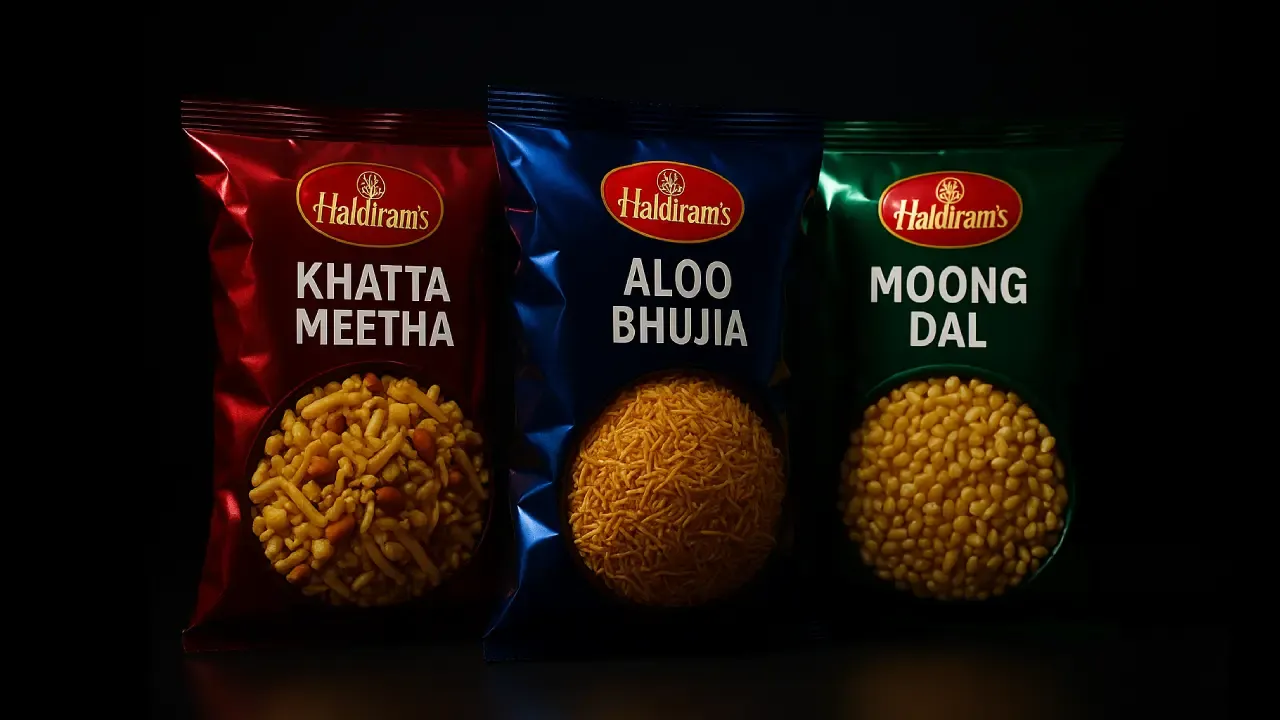
Haldiram is a name we casually see on supermarket shelves, airports, and family snack tables—but behind this massive brand lies a gripping story of courage, reinvention, and decades of family-led persistence. This cinematic journey traces how a teenage boy in Bikaner transformed a humble namkeen shop into a multi-billion-dollar global empire. Filled with rivalry, failures, breakthroughs, and bold business moves, the story of Haldiram shows how tradition can evolve into one of India’s most powerful food legacies.
In the Dusty Streets of Bikaner
The story begins in 1937, in the dry, bustling lanes of Bikaner, where a 13-year-old boy named Ganga Bishan Agarwal, lovingly called Haldiram, worked at his father’s tiny bhujia shop. The shop was ordinary, the sales modest, and the future unclear. But young Haldiram had something extraordinary—an obsession with improving the taste of bhujia and a deep curiosity about customers’ desires.
He spent hours experimenting with texture, spices, and technique. While most saw bhujia as a simple snack, he saw potential. That single mindset shift would become the seed of a global empire.
The First Breakthrough
At just 13, Haldiram innovated a version of bhujia that was lighter, crispier, and far more flavorful than anything Bikaner had ever tasted. People began to ask specifically for “Haldiram’s Bhujia,” and slowly, the family shop transformed from a neighbourhood counter to a known local stop.
But innovation did not guarantee stabiliAt just 13, Haldiram innovated a version of bhujia that was lighter, crispier, and far more flavorful than anything Bikaner had ever tasted. People began to ask specifically for “Haldiram’s Bhujia,” and slowly, the family shop transformed from a neighbourhood counter to a known local stop.ty. Competition was rising, resources were limited, and Bikaner’s market was too small to dream big. Yet, Haldiram refused to settle. He sensed opportunity far beyond his hometown.
The Move That Changed Everything
In the 1940s, the family made a bold decision: expand to Kolkata, then one of India’s most flourishing trade cities. The contrast was drastic—bustling streets, diverse food cultures, and endless business possibilities. But entering a new market also meant starting from zero.
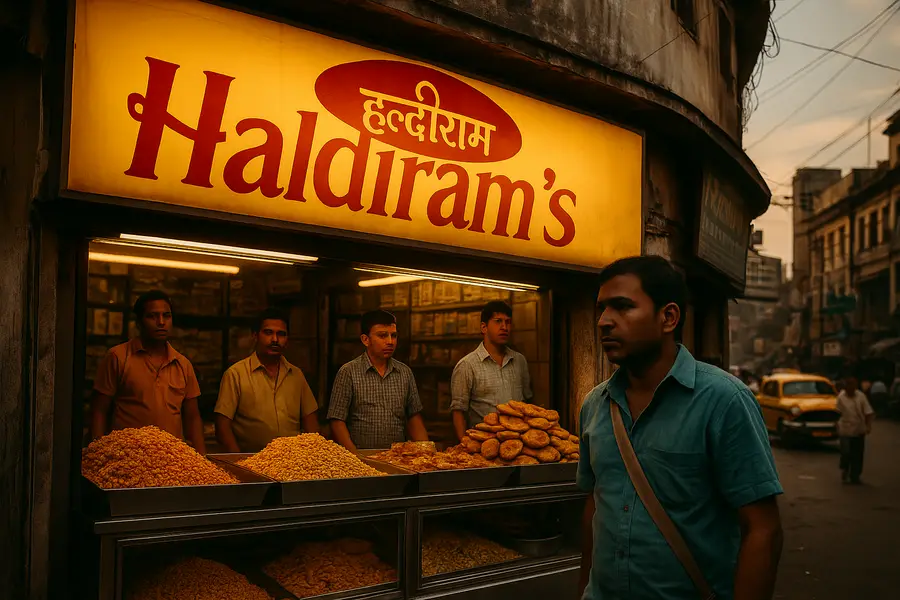
Thia is an AI-generated image — not a real historical photo.
At first, Kolkata didn’t understand Bikaneri bhujia. But consistency won. The unique taste caught on, and soon, Haldiram’s namkeen began to build a fanbase. Demand grew so quickly that the family had to establish a larger production unit.
This marked the real beginning of the Haldiram brand.
The Family Legacy Expands
Through the 1950s–70s, Haldiram’s name spread across Eastern India. But the most significant twist was yet to come. As the business grew, different branches of the family took responsibility for different regions—Nagpur, Delhi, and Kolkata.
This regional division created a unique phenomenon:
One brand. Three families. Three business kingdoms.
Yet all carried the same vision—quality, trust, and unmatched flavour.
The Delhi branch expanded aggressively into north India.
Nagpur became the hub of snacks, sweets, and packaged products.
Kolkata continued to dominate eastern India’s snack culture.
Each region innovated, competed, and grew—but ultimately strengthened the “Haldiram” identity.
Reinventing the Snack Industry
The 1980s and 90s brought major change. India’s packaging and retail industries were evolving, and supermarkets were slowly emerging. Haldiram saw the future coming earlier than most.
Instead of staying a local snack chain, they transformed into a packaged FMCG giant.
Vacuum-packed namkeen
Hygienic production
Quality control
Bold new product lines
These moves made Haldiram stand out in an era when most snack brands were still sold in loose packets.
Then came a turning point—the global Indian diaspora.
As Indians migrated abroad, craving the taste of home, Haldiram stepped in. Exports to the Middle East, U.S., U.K., and Australia grew rapidly. The world began to taste India through Haldiram.
The Rise of Modern Retail & Restaurants
In the 2000s, Haldiram evolved again. They opened large-format family restaurants in Delhi and Nagpur. These weren’t just dining spaces—they were experiences.
Crisp chole bhature
Sizzling hot raj kachoris
Fresh rasmalai
Iconic thalis
Families began to treat Haldiram as a reliable, premium-quality dining choice. And while restaurant sales boomed, packaged snacks quietly conquered retail.
By the 2010s, Haldiram became India’s largest snack company, surpassing global giants in local market share. Their revenues crossed thousands of crores, proving that an Indian traditional brand could outshine multinational corporations.
Tough Roads, Tougher Decisions
Success didn’t come without challenges.
Family disputes emerged.
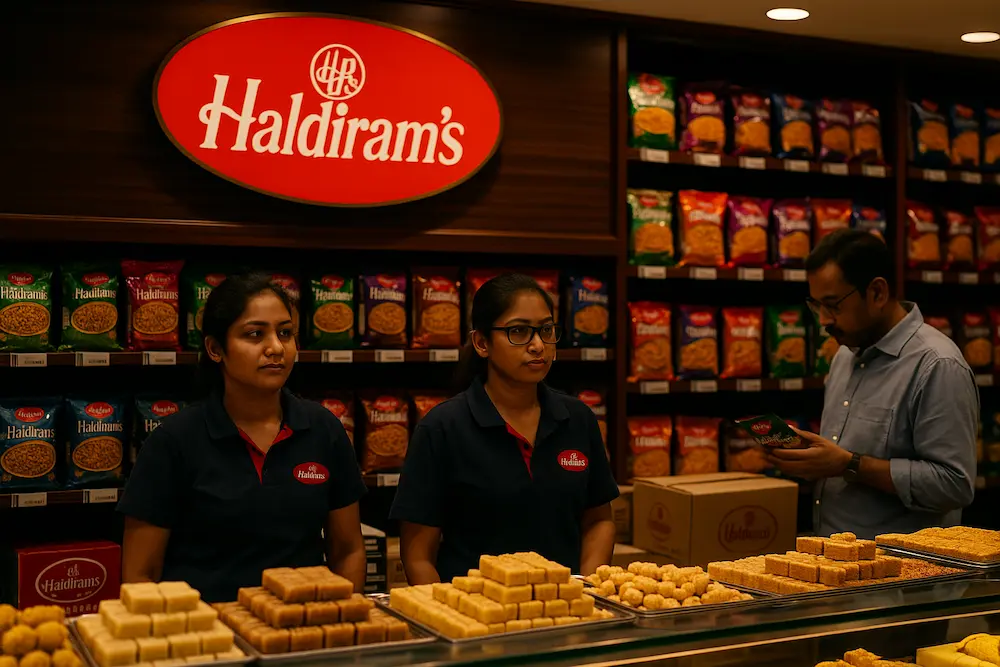
Thia is an AI-generated image — not a real historical photo.
Competition from new-age brands grew.
Supply chains needed modernization.
India’s changing food regulations demanded transparency and adaptation.
But the brand continued to evolve—modern factories, strict quality standards, and tech-driven logistics kept Haldiram ahead.
Even controversies and disagreements didn’t shake customer loyalty. The taste was too deeply rooted in Indian hearts.
The Empire of Today
Today, Haldiram is:
-
A multi-billion-dollar snack empire
-
Present in more than 80+ countries
-
A leader in namkeen, sweets, frozen foods, bakery, and restaurants
-
A symbol of Indian tradition blending with global business excellence
From a 13-year-old boy in Bikaner to a worldwide legacy, Haldiram stands as one of India’s most inspiring entrepreneurial stories.
What We Can Learn
1. Innovation can come from anywhere—even a small kitchen.
Haldiram didn't invent bhujia; he reinvented it. Transformation begins with small improvements.
2. Persistence is stronger than uncertainty.
He left Bikaner with nothing but confidence in his craft—and built an empire.
3. Expansion works when values stay intact.
Whether in Kolkata, Nagpur, or Delhi, one thing never changed: quality.
4. Adaptation is survival.
Packaging, exports, restaurants—Haldiram evolved with every era.
5. Legacy is built on consistency.
Generations later, the brand still represents trust, flavor, and cultural identity.