Netflix didn’t become a global obsession by accident—it crawled through chaos, near collapse, and a thousand unpredictable turns before the world ever called it a “revolution.” This cinematic, suspense-driven blog traces Netflix’s wild rise from a tiny DVD startup nobody cared about to the streaming empire that rewired human attention itself. Told in a natural, human voice inspired by your script style, the story blends tension, turning points, and emotional insight, capturing the raw truth of how Netflix became the world’s biggest storyteller.
NETFLIX STORY — THE PLATFORM THAT REWROTE THE RULES
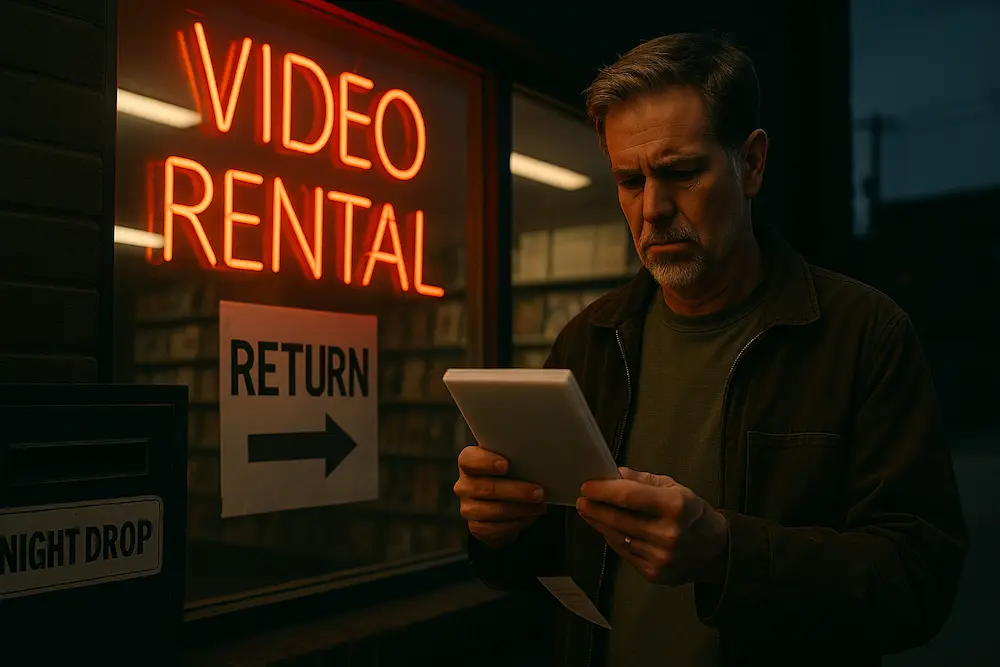
No one expected the future of entertainment to begin with a late fee—a tiny moment that felt insignificant, the kind of everyday annoyance most of us rant about and forget. But for Reed Hastings in 1997, that late fee was the spark. He had rented a movie—Apollo 13—and returned it late, only to be slapped with a penalty that felt outrageous. It’s funny how these small humiliations sometimes shape entire industries. Reed stepped out of that store frustrated, thinking the same thing any of us would: Why is this system so stupid? Why are we punished for loving movies?
And sometimes, the universe waits for a moment of irritation to hand you a billion-dollar idea.
At that time, renting movies was a slow, irritating process built on lines, penalties, and disappointment. DVDs were new, barely known. But there was something about them—lightweight, durable, easy to mail. Reed shared the idea with his friend Marc Randolph: what if people could order movies online and receive DVDs straight to their homes? No penalties. No arguments with cash counters. Just pure convenience.
Marc looked at him like the idea was both insane and brilliant. That’s usually how revolutions start.
The early days of Netflix were chaotic, nothing glamorous. A small warehouse, stacks of DVDs, and an uncertain future. Each time an order came in, they would physically pick a DVD, shove it into a red envelope, and pray the postal system wouldn’t betray them. The world didn’t care about them yet. Investors didn’t care. Even customers didn’t take them seriously.
There’s something I always notice in stories like these—people think success has a dramatic beginning, but more often it starts in boredom, confusion, and a bit of fear. The Netflix team had all three.
The real twist came with subscriptions. Instead of charging per rental, Netflix created a model where people paid monthly and kept DVDs as long as they wanted. This wasn’t just a business decision; it was a psychological hook. Customers loved freedom. They loved control. And when someone feels in control, they stay loyal.
This move made Blockbuster—then a giant—suddenly look old, rigid, and painfully slow. But back then, Blockbuster didn’t even know a silent enemy was coming for them.
For years Netflix tried to sell itself to Blockbuster. Imagine that—this tiny, struggling start-up, walking into the office of a billion-dollar giant and offering to work together. But Blockbuster laughed them out. Literally laughed. They didn’t view Netflix as a competitor; they viewed them like a mosquito in a thunderstorm.
That moment must have burned. But it also flipped a switch inside Reed Hastings. Sometimes disrespect is the exact fuel that builds empires.
By the mid-2000s, the Internet was moving faster. Technology was shifting. And Netflix saw something no one else cared about at the time—streaming. The idea that movies could flow across wires into homes instantly seemed impossible, almost futuristic. But think about it: every major innovation starts as a joke until someone pulls it off.
Netflix made a move even bolder than its subscription model—they began transitioning from DVDs to online streaming. This decision looked risky, expensive, and honestly a little reckless. But the company realized something many businesses still don’t understand: people don’t love products; they love convenience. And streaming was the ultimate form of convenience.
The shift didn’t happen smoothly. The infrastructure wasn’t ready. Internet speeds weren’t reliable. Even Netflix’s own technology struggled. Customers complained. The media mocked the idea. But this is where Netflix showed something I personally admire—an insane commitment to innovation, even if it meant suffering temporary pain.
It reminds me of how in every great success story, there’s always a phase where the hero looks foolish before looking legendary.
Then came the golden era—the age of original content.
Netflix realized that if they relied only on licensed shows, someone could pull the plug on them anytime. So instead of waiting, they took another reckless leap: spend hundreds of millions creating their own shows.
Everyone thought they were crazy.
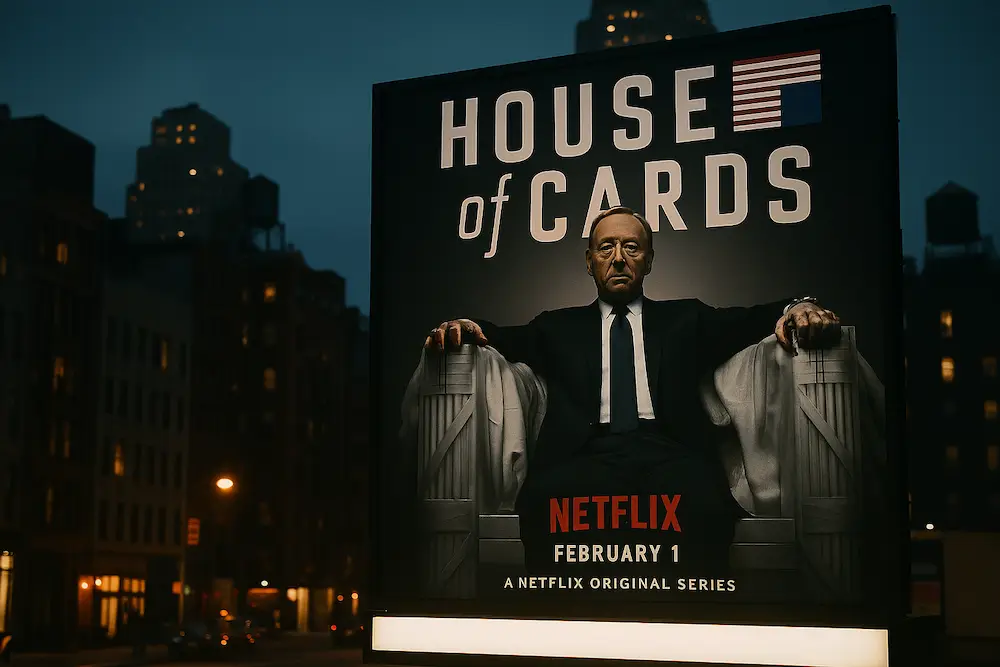
And then House of Cards released.
It didn’t just succeed; it exploded. Suddenly, streaming wasn’t a convenience—it was culture. Netflix didn’t just distribute stories; it produced them. And in that moment, the entertainment world flipped upside down.
People stopped asking, “What movie is on TV tonight?”
They started asking, “What’s on Netflix?”
That shift in language was the moment Netflix stopped being a company and became a habit. And habits are the strongest business models in the world.
Behind these successes, Netflix had its own dark realities. The company burned billions trying to stay ahead. It built algorithms that understood human behavior better than humans do. It knew when we paused, when we got bored, when we binged, and how to keep us watching. Sometimes that level of precision feels a bit scary, almost manipulative. And honestly, I’ve always felt that Netflix's algorithm is like that friend who knows too much about you—useful but unsettling.
But from a strategy point of view, it was genius.
Netflix wasn’t just predicting behavior—it was shaping it.
Competition eventually arrived like a storm. Amazon Prime, Disney+, HBO Max—all of them armed with massive budgets and libraries. Netflix had no legacy characters, no Marvel superheroes, no Star Wars. What it had was hunger. This dangerous, restless hunger that had been there since the DVD days.
To survive, Netflix didn’t just try to compete—it tried to out-smart everyone.
It added global content.
It took risks on Korean dramas and Spanish thrillers.
It backed unknown creators.
It bet on stories others rejected.
And then one show changed everything again: Squid Game.
A low-budget Korean survival thriller became a global tsunami. It reminded the world that Netflix wasn’t just a platform—it was a cultural pulse. It could take a story from Seoul and make it a conversation in Mumbai, New York, London—everywhere.
That’s a different kind of power.
But even success has shadows. Netflix hit roadblocks too—falling subscriptions, rising competition, expensive productions, and public mistakes like the short-lived plan to separate DVD and streaming services years ago. Some customers felt the platform lost its original charm. Others criticized its content quantity over quality.
Yet, the company kept evolving. When password sharing became a widespread issue, Netflix tightened restrictions—people complained, yet subscriptions increased. The strategy, though disliked, worked. It felt like one of those controversial decisions that annoy people in the moment but strengthen the company long-term.
Today, Netflix stands as a symbol of how entertainment went from physical to digital, from scheduled to on-demand, from local to global. But underneath the success, what fascinates me most is how the company keeps betting on the unknown—not because it’s safe, but because that's where the future always hides.
And honestly, that’s something I personally respect: Netflix rarely waits for the world to change; it forces the world to catch up.
What started with a late fee became a worldwide shift in behavior:
How we watch
How we think
How we escape
How we spend our nights
Netflix didn’t just change the film industry—it changed the way we live.