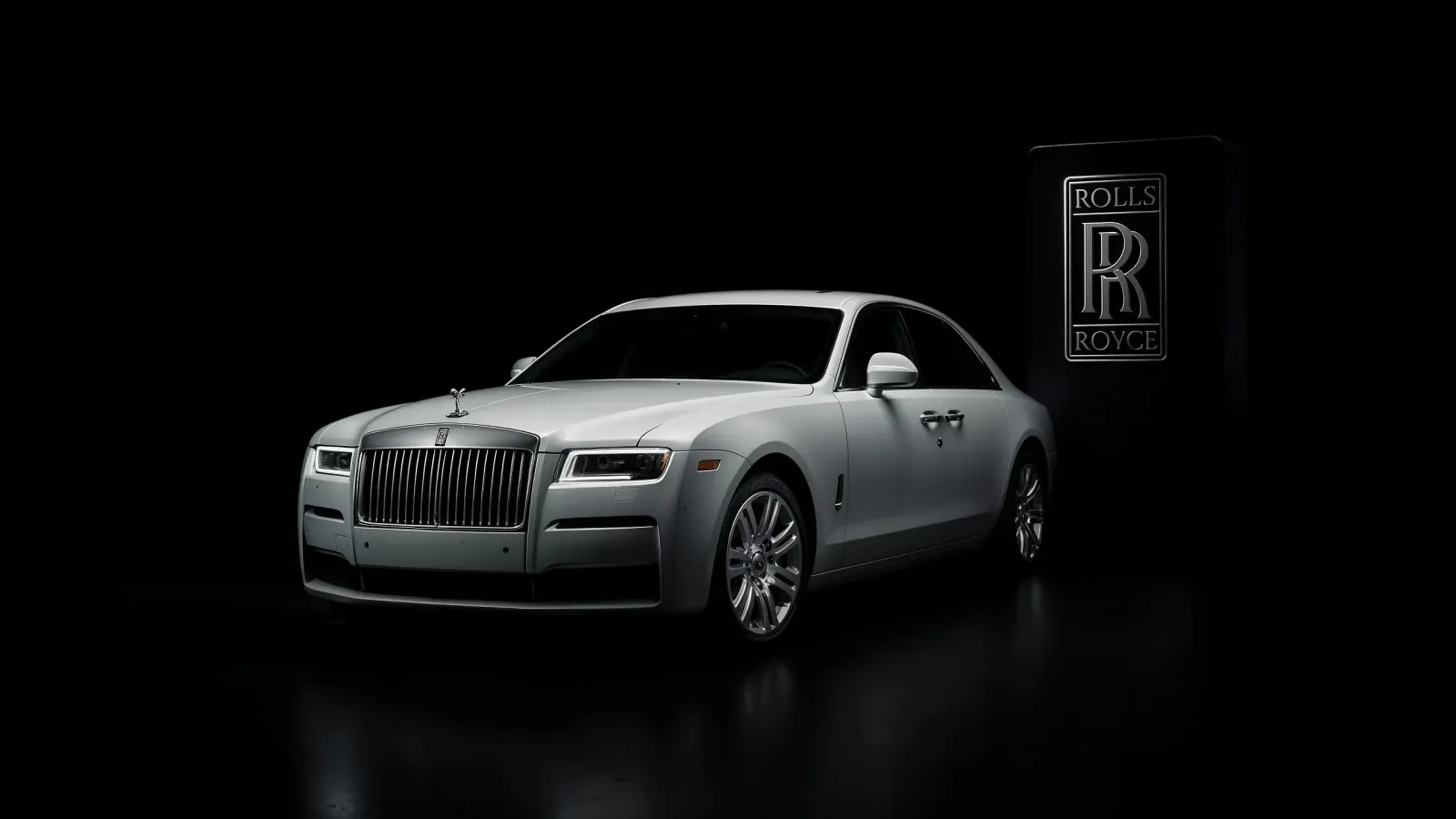
Rolls-Royce wasn’t born as a luxury symbol—it was carved out of poverty, obsession, and a partnership that felt almost destined. From a young engineer who refused to accept imperfection to an aristocrat chasing mechanical dreams, this story follows the brand’s dramatic rise, crushing fall, and powerful rebirth. Filled with tension, emotional turns, and the quiet intensity your script style carries, this long-form narrative reveals how Rolls-Royce became a global legend built on silence, precision, and impossible standards.
The Man Who Refused to Build Anything Ordinary
The story begins not with a car, but with a boy who hated noise.
In the late 1800s, Frederick Henry Royce grew up in poverty so deep that survival itself felt like a daily negotiation. His father’s business collapsed, leaving the family with nothing but uncertainty. Royce had to work at age nine, selling newspapers to earn coins so small they barely mattered.
But he had something far more valuable than money—an obsession with precision. Where most people saw machines as tools, Royce saw them as puzzles with emotions hidden inside metal. I always feel that people who come from struggle develop a different relationship with detail—they don’t just fix things; they listen to them.
When he was older, Royce joined an engineering company and mastered everything they threw at him. No shortcuts. No “good enough.” He would tweak screws, realign bolts, polish gears until they behaved the way he wanted. His mind worked like a camera lens slowly tightening its focus.
Still, he wanted something more—something he could call his own. In a small workshop in Manchester, he started building electric motors. Then, almost unintentionally, he tried building a car. And that attempt would alter automotive history.
The Meeting That Felt Like Destiny
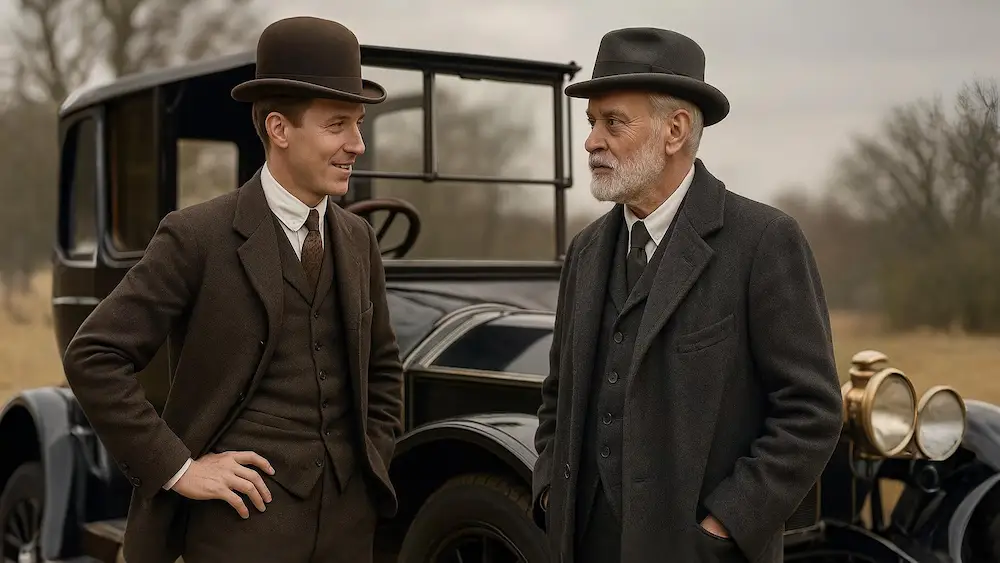
Thia is an AI-generated image — not a real historical photo.
Around the same time, the other half of this legend was living a completely opposite life.
Charles Rolls, a young, wealthy aristocrat, fascinated by machines and adventure, ran one of the first car dealerships in London. He sold Panhards and Peugeots, but he was always complaining. The cars were unreliable, noisy, temperamental—almost like divas throwing tantrums.
When Rolls heard there was a quiet little engineer in Manchester who had built a car smoother than anything England had ever seen, he didn’t believe it. But curiosity demanded he see it.
The moment Rolls met Royce, it felt like the universe had paired two contradictory energies:
Rolls, the charismatic dreamer.
Royce, the silent perfectionist.
Rolls took Royce’s car for a drive, and by the time he returned, he uttered a sentence that would rewrite automotive destiny:
“I want every car you ever build.”
It’s strange how sometimes a single test drive can determine the shape of an entire industry. I’ve always felt that success finds people who are already halfway obsessed before the world even notices.
The Birth of Something That Didn’t Make Sense
Together, they created Rolls-Royce in 1906.
And from the beginning, the company made no business sense at all.
Competitors were trying to make cars faster, cheaper, more accessible.
Rolls-Royce, on the other hand, was obsessed with silence.
Their philosophy was simple:
If the world builds noise, we will build peace.
If others build speed, we will build eternity.
They weren’t competing; they were crafting.
This is the thing I personally love about their approach—when you stop chasing everyone else, you finally hear your own design voice.
In 1907, they introduced a car so extraordinary it earned the title “The Best Car in the World.”
The Silver Ghost.
Its engine was so smooth, when they put a coin on its edge while the car ran, it didn’t fall.
People whispered that it wasn’t just engineering—it felt like magic.
War, Chaos, and a Silent Monster
As Europe marched toward World War I, Rolls-Royce faced a test of purpose.
Cars weren’t enough. The British government approached them with a request that carried the weight of survival:
Build an aircraft engine.
Royce, frail in health but unstoppable in spirit, poured his brilliance into the design.
The result?
The Eagle engine, which powered the first-ever crossing of the Atlantic by air.
Later came the Merlin engine, a machine so powerful yet so controlled that it became the heartbeat of the Spitfire—the aircraft that turned the tide of World War II.
It’s interesting how a company known for luxury became a guardian of the skies when history demanded it. Rolls-Royce had stepped into a realm where engineering wasn’t about wealth anymore—it was about survival, pride, and precision under pressure.
A Legacy Built in Shadows and Silence
After the war, Rolls-Royce returned to making cars, but something had changed. The world had witnessed the engineering superiority of the brand, not through leather seats and polished grills, but through engines that carried nations through the darkest hours.
But with that prestige came pressure. Rolls-Royce realized that every car they built was now a statement—not just of wealth, but of discipline, craftsmanship, and flawless engineering.
And believe me, maintaining perfection is harder than achieving it once.
The post-war models—the Phantom series—became symbols of power, not because they were loud about it, but because they whispered it. There’s something deeply psychological about the Rolls-Royce aura: a person sitting in the backseat never has to prove anything. The car speaks for them quietly.
The Collapse Nobody Expected
Through the 1960s, Rolls-Royce expanded aggressively, especially in jet engines. They developed the RB211, an engine ahead of its time—lightweight, efficient, revolutionary. And like every revolution, it demanded more money than the company had.
Costs spiraled.
Deadlines slipped.
The world economy shook.
And slowly, the cracks widened.
In 1971, the unthinkable happened.
Rolls-Royce declared bankruptcy.
Imagine that—this legendary brand, known for perfection, collapsing under its own ambition. I always feel that sometimes a company’s biggest strength—its obsession—can also be its most dangerous weakness. Rolls-Royce pushed so hard for innovation that it overstretched its own reality.
But the government intervened.
The aero-engine division was nationalized.
The car division was separated.
The brand survived—but it walked away scarred.
The Reinvention That No One Saw Coming
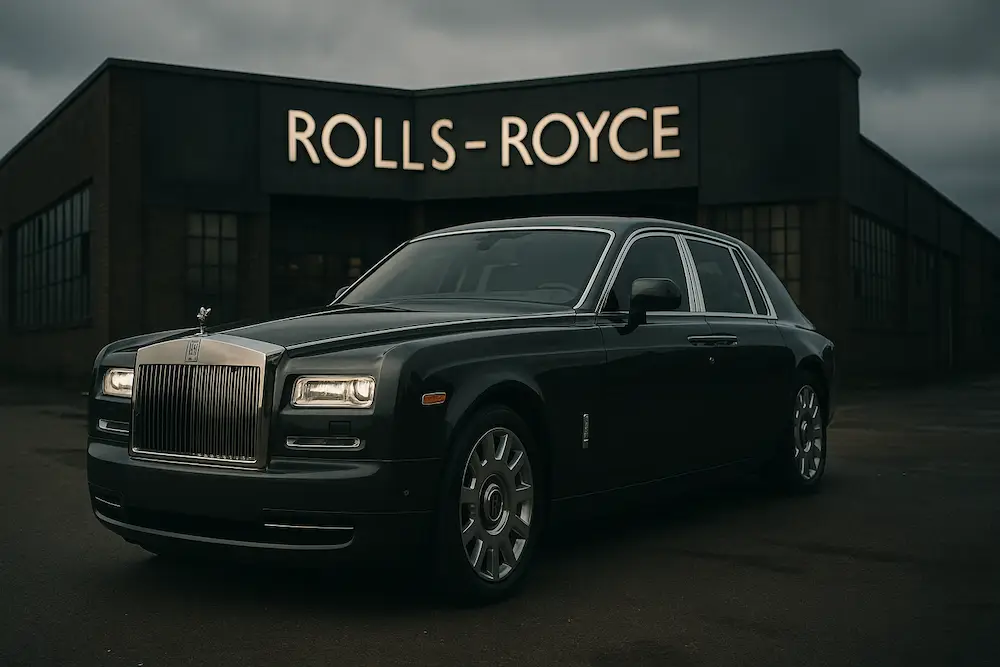
Thia is an AI-generated image — not a real historical photo.
While the engineering division rebuilt its foundation, the automotive side entered a new era of fragmentation. Rolls-Royce Motors was sold to Vickers, and decades later ended up in an unexpected tug-of-war between BMW and Volkswagen.
BMW won the rights to the name.
Volkswagen won the factory and the logo.
It was corporate chaos at its peak, a drama no one could have scripted. Yet somehow, from all the confusion, a new Rolls-Royce emerged—reborn, recalibrated, redesigned.
Under BMW, Rolls-Royce received something that had been missing for years:
unlimited resources, modern technology, and the freedom to dream again.
The brand didn’t just come back; it reinvented luxury.
The Phantom VII was introduced in 2003, and everything changed. The world realized Rolls-Royce wasn’t a relic—it was a renaissance.
The Craftsmanship That Feels Almost Spiritual
What makes Rolls-Royce extraordinary isn’t horsepower or top speed.
It’s the feeling that every car is treated like a human creation, not a mechanical one.
Each car takes months to build.
Each stitch is done by hand.
Each wood panel is carved individually.
Each customer can customize almost anything—from the leather’s shade to the constellations on the ceiling.
And that ceiling—the Starlight Headliner—has always felt like a story within a story. Hundreds of fiber-optic lights handwoven into the roof, creating a private galaxy. I once thought to myself, “This is what happens when engineering becomes poetry.”
Rolls-Royce cars don’t roar.
They glide.
They don’t impress.
They influence.
They’re not purchased.
They’re chosen.
A Modern Myth in a Noisy World
Today, Rolls-Royce exists in a world overflowing with flashy supercars. Loud engines. Aggressive designs. People buying speed to feel powerful.
But Rolls-Royce doesn’t compete there.
It never cared about being fast.
It cared about being unforgettable.
Models like the Cullinan, Ghost, Dawn, and the new all-electric Spectre all continue a legacy rooted in quiet dominance. The biggest irony is that in an era obsessed with noise, the most respected machine is the one that barely whispers.
That’s the thing I love most—the brand survived a century not by shouting, but by refining silence until it became a language.
The Immortality of an Idea
Look at the journey:
A poor boy who hated noise.
A wealthy aristocrat who loved adventure.
A silent car that changed expectations.
Engines that helped win wars.
A collapse that nearly erased the brand.
A rebirth that rewrote luxury.
Rolls-Royce isn’t just a company—it’s a cultural phenomenon built on the belief that engineering can be art, silence can be powerful, and luxury can be a philosophy, not a price tag.
Even today, when I see a Rolls-Royce glide past, it doesn’t feel like a car.
It feels like a moving legacy—an echo of every engineer, every craftsman, every bold decision that shaped it. And in a strange way, it reminds me that real greatness never rushes. It just arrives… quietly.