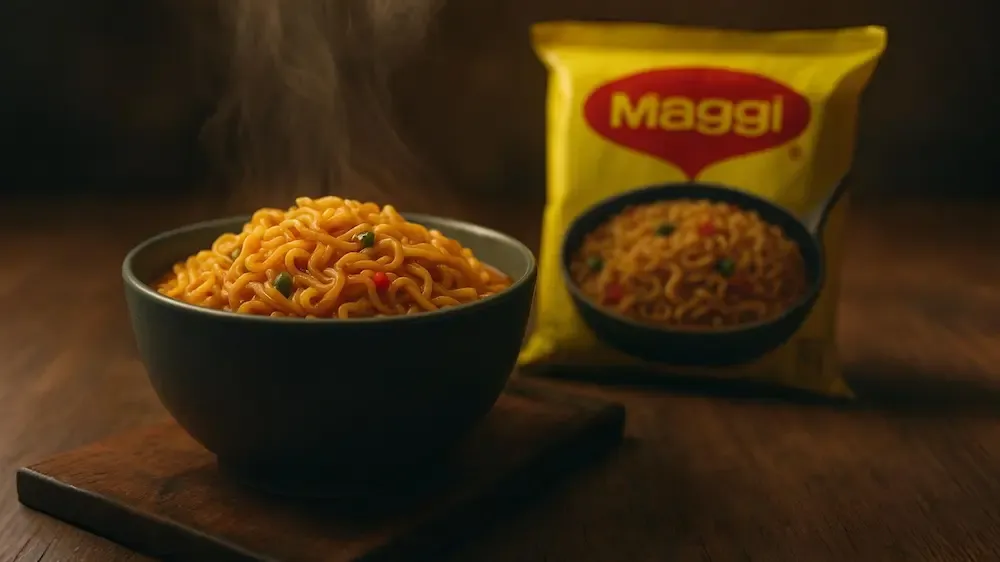
Few brands in India have stirred as many emotions as Maggi. It’s not just a snack; it’s a memory woven into millions of lives — from college hostels and roadside dhabas to cozy kitchen evenings. Yet behind its comforting yellow packet lies a story of bold ambition, crushing controversy, and one of the most powerful comebacks in business history. Maggi’s journey is more than the tale of a noodle brand — it’s a masterclass in resilience, trust, and the unbreakable bond between people and their comfort food.
When Nestlé launched Maggi noodles in India in 1983, the idea was simple yet revolutionary — to bring a ready-to-cook, tasty, and affordable meal to busy families. At that time, India was still discovering the concept of convenience food. Traditional home-cooked meals dominated, and the idea of instant noodles seemed alien. But Maggi came with a promise that instantly clicked with a young generation — “2-minute noodles.”
In reality, it took a bit longer than two minutes, but that didn’t matter. What mattered was how those curly yellow strands connected to India’s changing lifestyle. College students found a quick fix for midnight hunger, mothers discovered a way to please their children with something tasty yet “homey,” and bachelors found comfort in something easy to make. Maggi soon became a part of Indian pop culture — not just a product but an emotion.
As years passed, Maggi’s bond with India only deepened. Its catchy jingles — “Maggi Maggi Maggi” — echoed in every home. The yellow packet became a symbol of warmth, nostalgia, and belonging. In hill stations, vendors sold steaming Maggi with mountain views; in cities, it became the unofficial meal of hostels and working youth. It wasn’t just food anymore — it was a story everyone shared.
But we know every great story did not complete without a conflict!. In 2015, Maggi faced its biggest nightmare. Reports claimed the noodles contained excessive lead and monosodium glutamate (MSG) beyond permissible limits. Overnight, Maggi — the nation’s favorite comfort food — was labeled unsafe. The Food Safety and Standards Authority of India (FSSAI) ordered a nationwide ban. Shelves were emptied, ads pulled down, and trust shattered. For the first time in decades, Indian kitchens looked incomplete without that yellow packet.
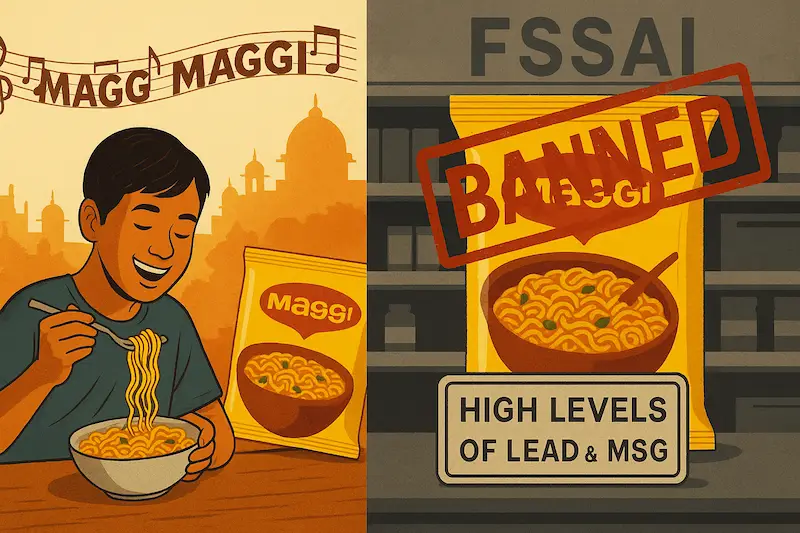
The fall was brutal. Nestlé India faced a loss of nearly ₹500 crores, lawsuits, and a storm of negative press. But what hurt most wasn’t financial — it was emotional. People felt betrayed by a brand they’d grown up with. Yet, while the world doubted, Maggi quietly began rebuilding itself. Nestlé didn’t rush to defend — instead, it chose humility and action. The company re-tested its products, set up transparent quality checks, and communicated openly with the public.
And then came the moment that defined the brand’s legacy — Maggi’s comeback. After months of silence, Maggi returned to shelves in late 2015. The response was overwhelming. Customers who once felt angry lined up to buy it again. Within weeks, Maggi reclaimed 60% of the market it had lost. In less than a year, it returned to its old crown as India’s favorite noodle brand.
What made Maggi’s comeback so powerful wasn’t just marketing — it was emotion. Nestlé didn’t try to rebrand or reinvent. Instead, they reminded people of what Maggi truly meant — comfort, childhood, togetherness. They released heartfelt ads showing how Maggi had always been a part of everyday life — from the mother cooking for her child to friends bonding over late-night noodles. Slowly, trust returned.
Since then, Maggi has evolved while staying rooted in its legacy. New flavors, healthier options, and product extensions like Maggi oats, Maggi masala-ae-magic, and cup noodles joined the family. Yet, the soul of the brand remained unchanged — simple, nostalgic, and comfort-driven. Maggi became not just a symbol of taste but of endurance — proof that even when a brand falls, it can rise stronger with honesty and consistency.
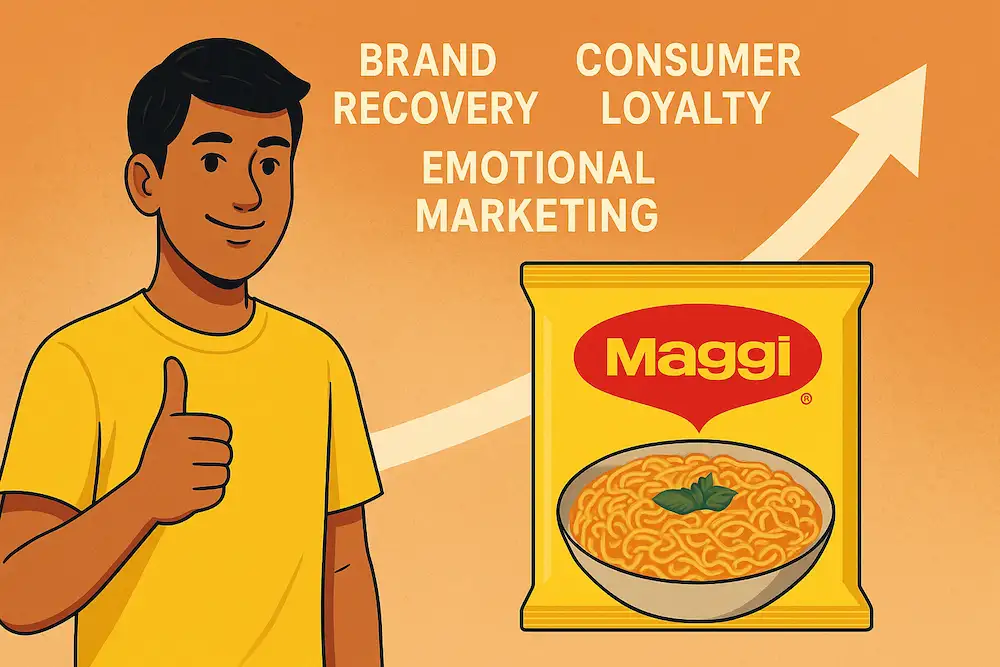
Maggi also taught India something deeper about resilience. The scandal showed how quickly fame can fade, but the comeback proved that trust, once earned sincerely, can return. Today, Maggi stands not just as a noodle brand but as a case study in emotional marketing, brand recovery, and consumer loyalty. It’s taught businesses worldwide that people forgive mistakes — but only when they feel heard and respected.
What We Can Learn
Maggi’s story is more than corporate recovery — it’s a reflection of human connection. It teaches us that trust is built over time but tested in moments of crisis. The brand didn’t fight back with aggression; it fought with patience and truth. It showed that the strongest comeback isn’t about shouting louder but standing firm when the world doubts you.
In every cup of Maggi today lies a story — of nostalgia, redemption, and resilience. Because sometimes, what truly matters isn’t how fast you cook your noodles — but how gracefully you rise after the fire.
Images and trademarks of creators or brands featured in this article
are used for identification and informational purposes only.
All rights belong to their respective owners. No endorsement is implied.