OpenAI’s story reads like a modern legend — a small group of dreamers who set out to build artificial intelligence that would help humanity, not replace it. From a nonprofit experiment to one of the most powerful tech forces in the world, OpenAI’s journey is filled with ambition, controversy, ethics, and wonder. Behind every AI-generated word and image lies a deeper question — can machines ever truly understand us, and can we trust them when they do? This is the story of how OpenAI reshaped the world’s relationship with creativity, information, and the very meaning of intelligence, forever changing the way humans and machines learn, collaborate, and imagine the future together.
In the mid-2010s, artificial intelligence was a buzzword whispered in the labs of Silicon Valley. Big tech companies were racing to develop smarter systems, but their goals leaned heavily toward profit and control. It was in this climate, in December 2015, that a group of visionaries — Elon Musk, Sam Altman, Greg Brockman, Ilya Sutskever, and others — came together to form OpenAI. Their mission was simple yet radical: to ensure that artificial intelligence would benefit all of humanity, not just a handful of corporations.
They began as a nonprofit organization, guided by an almost philosophical promise — transparency, safety, and shared progress. OpenAI wanted to make AI not just powerful, but ethical and accessible. Their early projects focused on robotics and basic neural networks, but it wasn’t long before their research started changing how the world looked at machine learning.
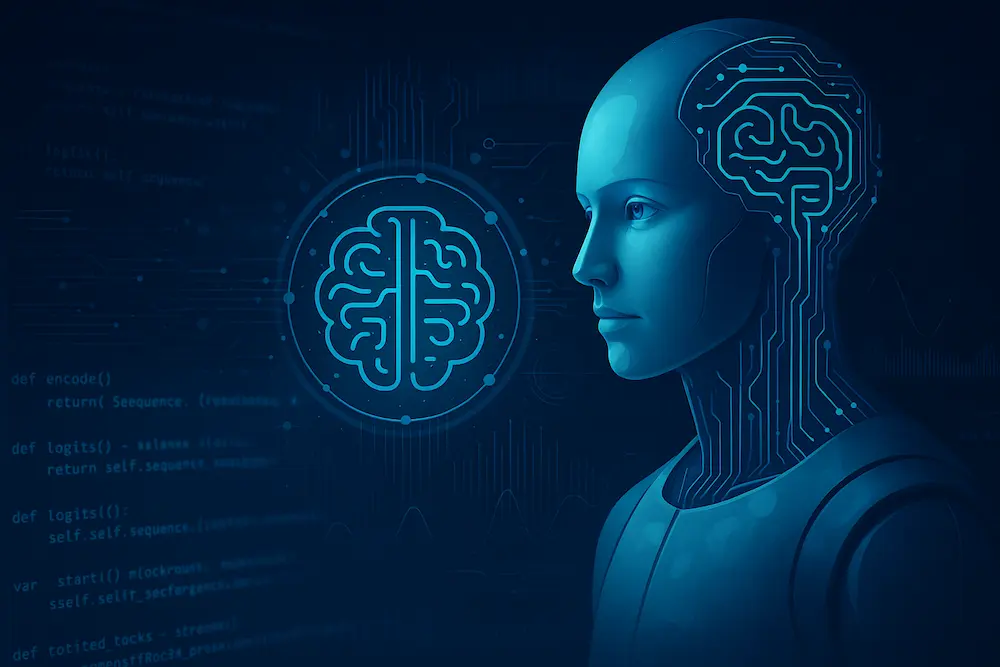
The first major turning point came with the release of GPT — Generative Pre-trained Transformer. GPT was unlike anything people had seen. Instead of simply following commands, it could generate human-like text — essays, stories, poems, code, and conversations that felt almost real. GPT-2 and GPT-3 soon followed, each one more capable, more intuitive, and more eerily human. Suddenly, AI was no longer a concept of the future. It was writing blog posts, composing music, and helping people learn new skills.
But OpenAI’s rise wasn’t without turbulence. As the models became more advanced, the ethical questions grew louder. What if such technology spread misinformation? What if it replaced jobs? Could AI be used for manipulation or harm? OpenAI had to balance innovation with responsibility. That tension defined much of its journey — a constant struggle between pushing boundaries and protecting humanity from the risks of its own creations.
In 2019, OpenAI transitioned from a pure nonprofit to a “capped-profit” company, allowing it to attract investments while staying true to its mission. This move brought in billions in funding — most notably from Microsoft — and opened the door to massive expansion. Together, OpenAI and Microsoft built one of the most powerful supercomputers in the world to train large language models. This partnership also led to the integration of OpenAI’s models into products like Microsoft Word, Excel, and Bing, making AI part of everyday life for millions.
When OpenAI launched ChatGPT in November 2022, the world changed overnight. Within five days, it reached a million users — faster than any app in history. Students used it for essays, developers for coding, writers for brainstorming, and businesses for automation. Suddenly, conversations with machines felt natural, even emotional. ChatGPT wasn’t just a tool — it was a cultural phenomenon.
For Sam Altman, OpenAI’s CEO, the vision went beyond technology. He believed AI could amplify human creativity, solve global problems, and accelerate innovation in medicine, education, and science. But he also warned that unchecked AI could pose existential risks — from misinformation to misuse of power. That paradox — between hope and fear — became the heartbeat of OpenAI’s story.
In the following years, OpenAI continued to evolve its technology: DALL·E for image generation, Whisper for speech recognition, and the Codex model for programming assistance. Each breakthrough blurred the line between human imagination and machine intelligence. Artists began using AI to paint; programmers built apps with its help; teachers redesigned lessons using AI tools. What was once science fiction had quietly become daily reality.
But with growth came scrutiny. Critics questioned whether OpenAI was still truly “open,” as access to its most powerful models became limited. Others raised concerns about bias, misinformation, and data privacy. Governments began drafting AI regulations, while researchers called for global cooperation to ensure AI safety. OpenAI found itself in the center of a debate that was no longer just technological — it was moral.
And yet, despite the controversies, OpenAI’s influence kept expanding. It became not only a pioneer of technology but a symbol of the modern era’s biggest question: how far should we go in teaching machines to think? The company’s experiments forced humanity to look inward — to redefine intelligence, creativity, and even consciousness.
Today, OpenAI stands as both a marvel and a mirror. It represents our boundless curiosity and our deepest fears. Every new model it releases sparks wonder — and warning. But perhaps that’s what makes its story so human. Because OpenAI was never just about machines; it was about people — their hopes, flaws, and endless desire to create something greater than themselves.
What We Can Learn
OpenAI’s journey reminds us that progress is never just about invention — it’s about intention. Technology itself isn’t good or bad; it’s the purpose we give it that defines its impact. OpenAI teaches us that innovation must walk hand in hand with ethics, and that true intelligence — whether artificial or human — lies in empathy, curiosity, and courage.
As the world races toward an AI-powered future, OpenAI’s story stands as a reminder: machines can learn to think, but it’s up to us to teach them to care.
Images and trademarks of creators or brands featured in this article
are used for identification and informational purposes only.
All rights belong to their respective owners. No endorsement is implied.