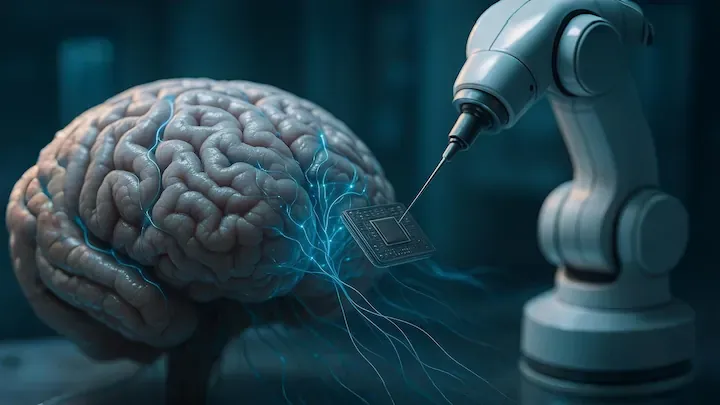
Artificial Intelligence didn’t begin with computers or laboratories—it began with humanity’s oldest curiosity: the desire to recreate thought itself. From ancient myths to modern machine-learning breakthroughs, AI has evolved through failures, experiments, wars, corporate races, and astonishing discoveries. This long-form narrative explores AI’s emotional, philosophical, and technological journey, revealing how it learned, how it changed us, and how it may shape the future of human life. Cinematic, reflective, and deeply human, this story unpacks the past, present, and uncertain future of a technology that mirrors the soul of its creators.
Artificial Intelligence did not begin with code or circuits or glowing screens. It began in the quiet, restless corner of the human mind where imagination first dared to challenge its own limits. Long before machines existed, long before electricity became a heartbeat of modern civilization, humans were already dreaming of artificial life. They carved mechanical birds, designed ancient automata, and wrote myths about statues that could speak. These early stories weren’t technological—they were emotional. They were about our need to see ourselves reflected in something outside of ourselves. The desire to recreate intelligence wasn’t born from science; it was born from curiosity, from the simple and stubborn human urge to understand how thought works by trying to rebuild it.
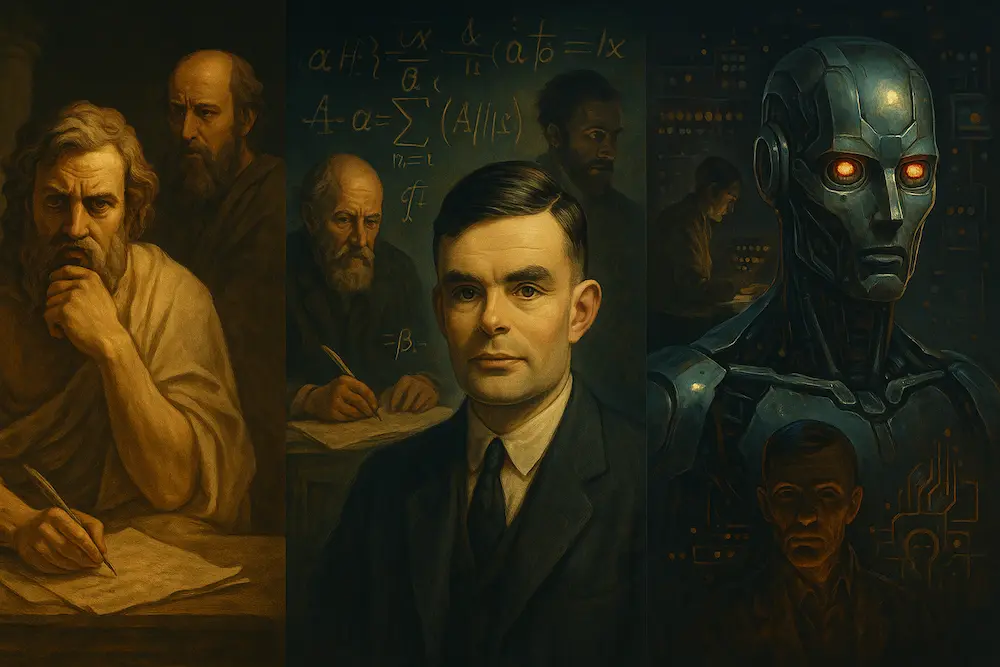
As time passed, these myths dissolved into philosophy, and philosophers began asking questions that slowly eroded the line between imagination and possibility. They wondered whether the human mind was simply an intricate machine, and if so, whether another machine could someday imitate it. Then mathematics arrived, adding structure to speculation. Logic became the language through which thinkers expressed mechanical reasoning. But it wasn’t until the 20th century, when the world was tangled in global conflict and desperate for computational power, that the foundation for modern AI finally formed. Alan Turing, a quiet genius whose brilliance still humbles the world, broke open the door by proving that machines could perform logical operations and potentially imitate reasoning. His revolutionary idea—that a machine could think if its behavior became indistinguishable from a human mind—planted the flag for a field that did not yet exist but soon would.
When scientists gathered in 1956 at Dartmouth College for what would become the official birth of AI, they believed they were standing at the edge of a breakthrough. Their optimism was intense, almost intoxicating. They imagined machines that could solve complex problems, understand language, learn concepts, and adapt on their own. But the world was not ready for their dreams. Computers were slow and painfully limited. Memory was scarce. Algorithms were primitive. Everything the early AI researchers attempted felt like teaching a stone to sing—it just didn’t respond. Funding collapsed, enthusiasm faded, and the field entered its first winter, a period when even hopeful minds questioned whether they were chasing an illusion.
But history has a way of rewarding persistence. Even while AI struggled publicly, a few researchers worked quietly, nurturing ideas that others had abandoned. Their devotion kept AI alive through the harsh years. I’ve always believed that this stubbornness is what gave AI its soul. The technology was not invented in success—it was invented in failure, in nights without sleep, in experiments that crashed, and in the unwavering belief that intelligence could be replicated if only we understood it deeply enough.
By the 1980s, expert systems temporarily revived interest in AI. These programs attempted to encode human decisions using thousands of rules, like building a machine out of pure logic. For a moment, it seemed like AI had finally found its direction. But these systems were brittle, inflexible, and prone to collapse when faced with real-world complexity. They couldn’t scale. They couldn’t adapt. They couldn’t grow. When the second AI winter arrived, it felt colder and more devastating than the first.
Yet again, the seeds quietly survived.
In small, dim research labs, a few scientists continued exploring neural networks. The idea mimicked the brain—not symbolically, but mechanistically—by connecting artificial neurons in layers that could be trained through experience. Early attempts failed badly because the available computers were too weak to train anything meaningful. But the idea wasn’t wrong. It was waiting for time to catch up. And eventually, time did. Faster processors, massive datasets, and improved mathematical techniques ignited what neural networks needed: oxygen.
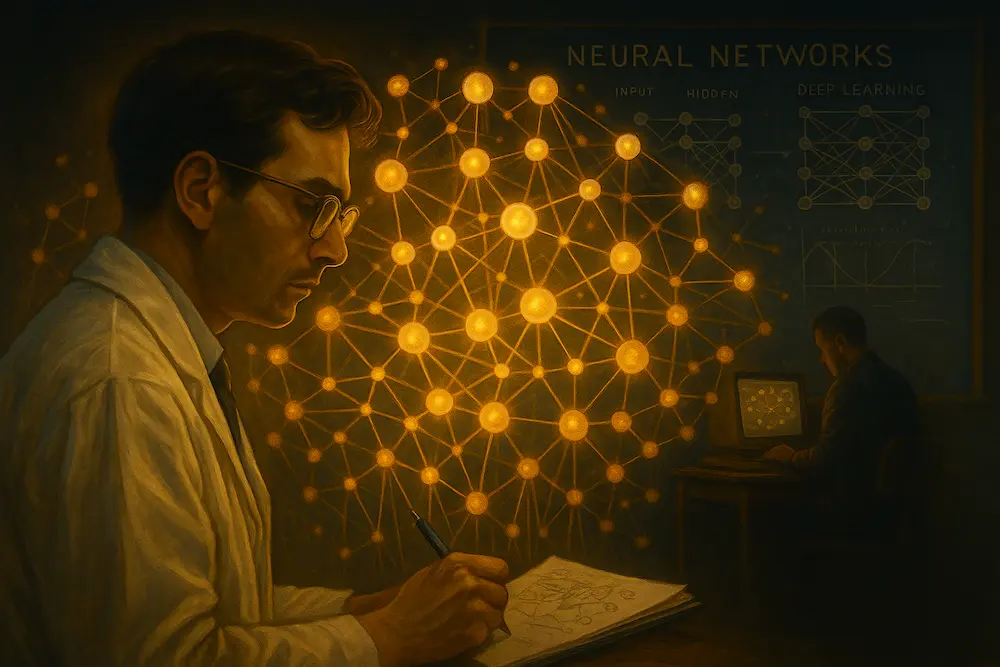
Suddenly, machines weren’t just following instructions—they were learning. A neural network could study thousands of handwriting samples and slowly begin to recognize digits. A slightly more advanced one could detect patterns in audio, images, or text. And then deep learning emerged, stacking layer upon layer of neurons, allowing models to process complexity previously unimaginable.
AI started outperforming humans in tasks that seemed untouchable. It recognized images better than experts, translated languages with astonishing accuracy, diagnosed diseases earlier than doctors, mastered games that required creativity, and even generated poems, music, and art. But the most transformative shift happened quietly: AI became part of everyday life. It entered pockets, screens, microphones, apps, websites, and homes. It powered recommendations, security systems, maps, search engines, and entertainment. People didn’t notice its arrival because AI integrated itself the way dusk blends into night—slowly, subtly, and completely.
The way AI learns remains one of the most fascinating aspects of modern science. Training a model is like raising a child at impossible speed. You feed it data—images, text, speech, examples—and it guesses what the correct answer should be. Its first attempts are terrible. Then feedback adjusts its internal weights, the tiny numerical parameters that shape how its neurons process information. Over millions of training cycles, the machine learns the patterns so deeply that it begins to demonstrate what appears to be understanding. But here lies the misunderstanding: AI doesn’t truly understand. It predicts. It imitates. It patterns itself around probability, not meaning. It is extraordinary, but it is not conscious. It is powerful, but it is not aware.
This distinction matters because the world often confuses intelligence with intention. When AI generates human-like writing, we see it as something alive. When it recommends content with uncanny accuracy, we assume it knows us. But AI doesn’t know anything the way humans do. It simulates behavior. It replicates patterns. And that makes it both useful and dangerous, depending on how it is wielded.
AI also inherits our flaws. If trained on biased data, it behaves with bias. If trained on misinformation, it spreads misinformation. If optimized only for engagement, it amplifies addiction and division. AI is not a mirror of perfection—it is a mirror of us. And that reflection can be uncomfortable.
Meanwhile, as AI matured, corporations realized something world-changing: whoever controlled the most powerful AI would control the digital future. This realization sparked a silent war across Silicon Valley and beyond. Google invested heavily in its DeepMind and Brain teams, releasing breakthroughs like the Transformer, which became the backbone of modern AI models. OpenAI emerged with a bold mission but soon became a lightning-rod force with models that astonished the world. Microsoft formed deep partnerships, integrating AI into products and infrastructure. Meta built enormous AI research labs, believing intelligence should be open-source and accessible. Amazon infused AI into every corner of commerce and logistics. Apple quietly refined on-device intelligence, pushing privacy-oriented machine learning. Nvidia, the quiet giant, provided the GPUs that made all of this possible, turning into the engine of the AI revolution.
These companies didn’t just innovate—they competed with an intensity that felt more like an arms race than a tech evolution. They hired top researchers with unimaginable salaries. They bought startups the way empires once acquired territories. Governments joined the race too, pouring billions into national AI strategies. AI became not just a tool, but a geopolitical asset. Countries feared falling behind. Corporations feared becoming irrelevant.
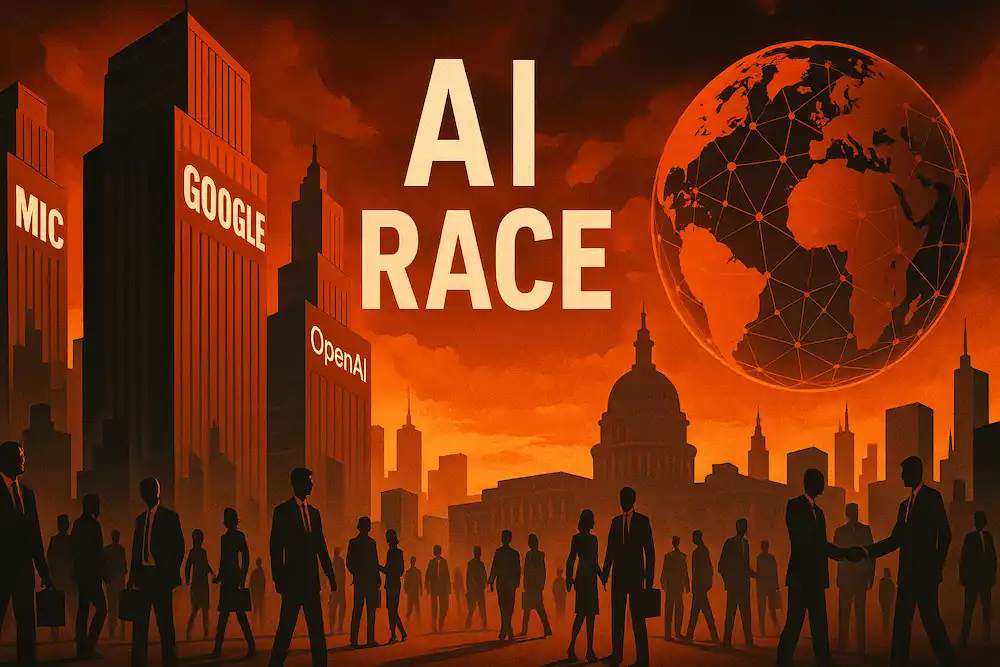
The pace of breakthroughs became breathtaking and frightening at the same time. Models grew from millions to billions to trillions of parameters. Training runs consumed enormous energy. New capabilities appeared faster than researchers could fully understand them. And this created a tension that still defines the AI landscape—progress happens faster than safety. Innovation outpaces regulation. Power evolves quicker than responsibility.
From my perspective, the modern AI race feels like humanity sprinting into the future while still trying to tie its shoelaces. We want progress so badly that we sometimes forget the cost. But the cost is real: privacy erosion, algorithmic bias, job displacement, misinformation, manipulation, and the risk of creating systems whose behavior we cannot completely predict.
And yet, despite all these concerns, AI remains one of the greatest tools ever invented. The same technology that spreads misinformation can also detect cancer earlier than any radiologist. The same algorithms that recommend viral videos can also optimize global agriculture to prevent famine. AI can empower teachers, transform medicine, revolutionize science, and personalize learning for every student in the world. It can simulate molecules to design new drugs, model climate patterns to prepare us for disasters, or generate ideas for architects and engineers that humans alone might never conceive.
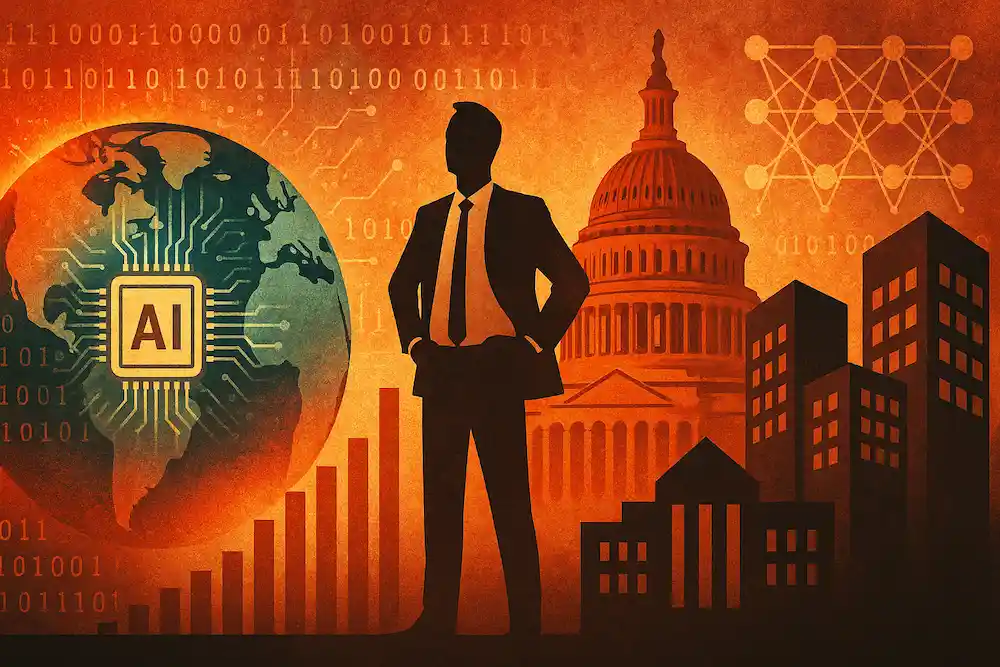
When used responsibly, AI is not a threat to human intelligence—it is an expansion of it.
The future will not be about AI replacing humans. It will be about humans who learn to work with AI replacing those who don’t. AI will handle repetitive tasks, freeing people to focus on creativity, intuition, emotion, and leadership. The workplace will evolve, not disappear.
But we must acknowledge that the future also holds risks. As AI grows more capable, it becomes harder to predict and control. Misaligned AI—systems that pursue goals misinterpreted or misdefined—could cause unintended harm. They might optimize in ways that disregard ethics or safety. They might take shortcuts that humans consider unacceptable. They might scale risks faster than we can contain them. These are not supernatural threats—they are engineering challenges, ethical dilemmas, and governance issues.
I believe the real danger of AI lies not in the technology itself, but in the speed at which we adopt it. Humanity has a history of unlocking powerful tools before fully understanding their consequences. We play with power long before we learn to respect it. The challenge with AI is that the scale is unprecedented. A mistake in one system can propagate globally in minutes. A biased dataset can reinforce discrimination across millions of decisions. A deepfake algorithm can destabilize trust in institutions. A misaligned model can produce results that ripple through economies.
But this doesn’t make AI evil. It makes AI a responsibility.
We need better governance, better safety research, better transparency, and better public understanding. We need to teach people how AI works, how to use it, how to identify risks, and how to think critically in the age of synthetic information. We need companies to build responsibly, not recklessly. We need governments to regulate wisely, not restrictively. We need societies to embrace AI with excitement and caution in equal measure.
AI began as a whisper in human imagination. Then it became a scientific rebellion. Then a technological awakening. Then a global race. Now it stands on the edge of becoming a civilization-defining force. The next chapter is unwritten, and it depends entirely on us.
Artificial Intelligence is not the story of machines learning to think. It is the story of humans daring to recreate intelligence itself—an audacious attempt to understand life by rebuilding its most mysterious capability. But in doing so, we have built something that reflects us more perfectly than we expected. AI is not a window into the future; it is a mirror showing us who we are right now—our brilliance, our flaws, our ambitions, and our fears.
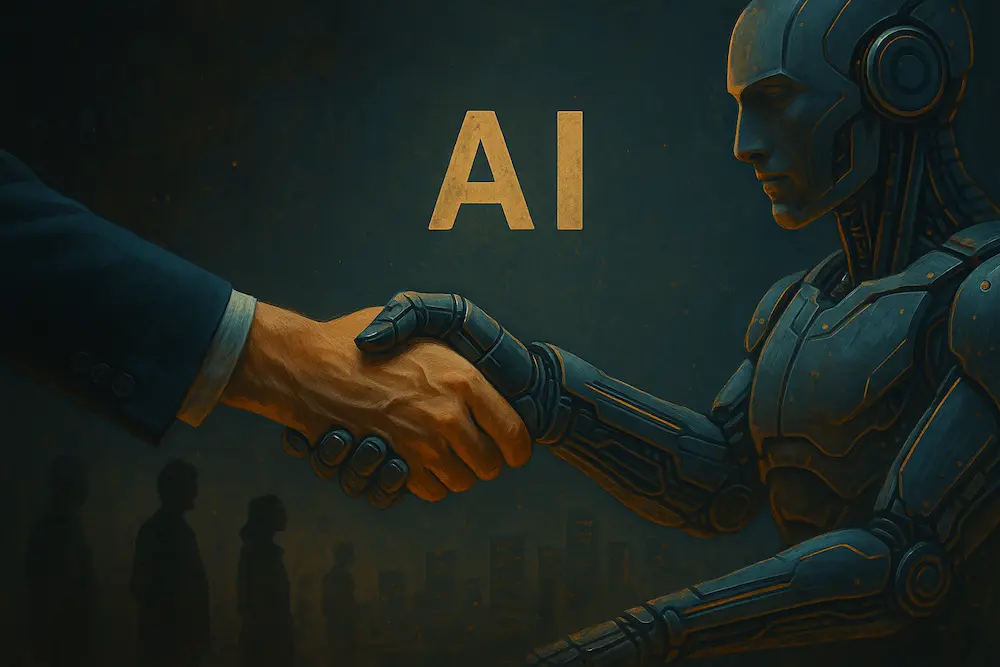
The question is no longer whether machines can think.
The real question is whether humanity can think deeply enough about the machines it creates.
Because the future will not be written by AI alone.
It will be written by the relationship between humans and the intelligence they have unleashed.
And like every great relationship in history, trust, responsibility, and intention will determine whether it becomes our greatest achievement—or our most dangerous mistake.