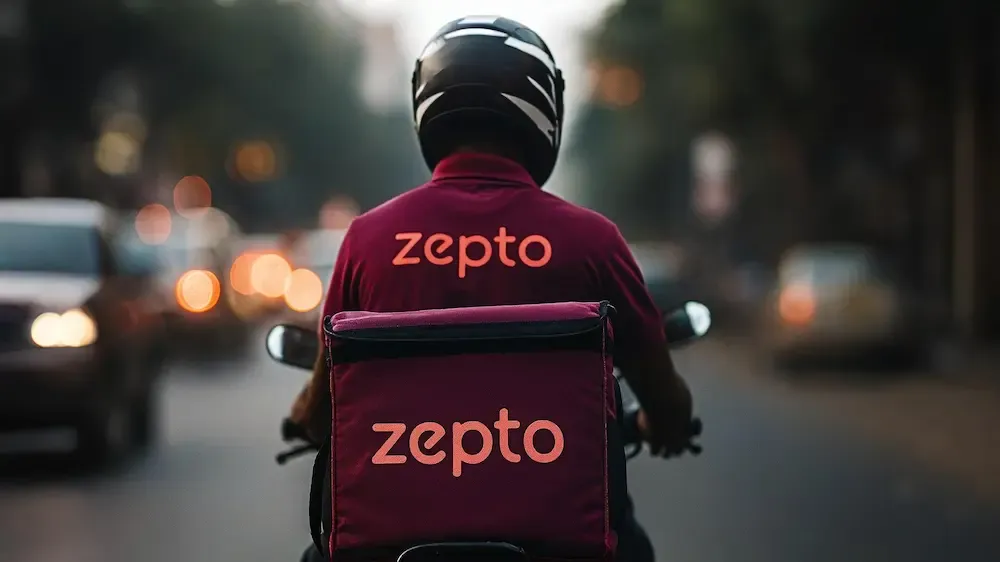
Zepto didn’t begin as a billion-dollar company — it began as a failure. Two teenage dreamers, armed with laptops and sleepless ambition, set out to solve India’s grocery delivery problem. Their first attempt, KiranaKart, collapsed under the weight of its own mistakes. But instead of giving up, they studied that failure like a manual for success — and from its ashes rose Zepto, the lightning-fast 10-minute delivery revolution that reshaped India’s quick-commerce market. This is the full story of how two young boys built billion dollar Empire
Part One: The Fall of KiranaKart
It all started with two classmates — Aadit Palicha and Kaivalya Vohra, born in 2001 — who grew up in Dubai and shared a deep love for coding and entrepreneurship. Both were ambitious teenagers who dreamed of building something impactful. After high school, they joined Stanford University to study computer science. But destiny had other plans.
When the COVID-19 pandemic hit in 2019, they returned to India to be with their families. As lockdowns shut down cities, people struggled to buy groceries — deliveries took 24 hours or more, and local shops were overwhelmed. To most people, this was an inconvenience. But to Aadit and Kaivalya, it looked like a billion-dollar opportunity.
They started small. In their Mumbai apartment, Aadit created a WhatsApp group for neighbors. Whenever someone needed groceries, they sent their list, and Aadit personally shopped and delivered them for a ₹10 fee. Kaivalya managed orders and logistics remotely. The feedback was incredible — people loved the convenience. The duo realized they were onto something big.
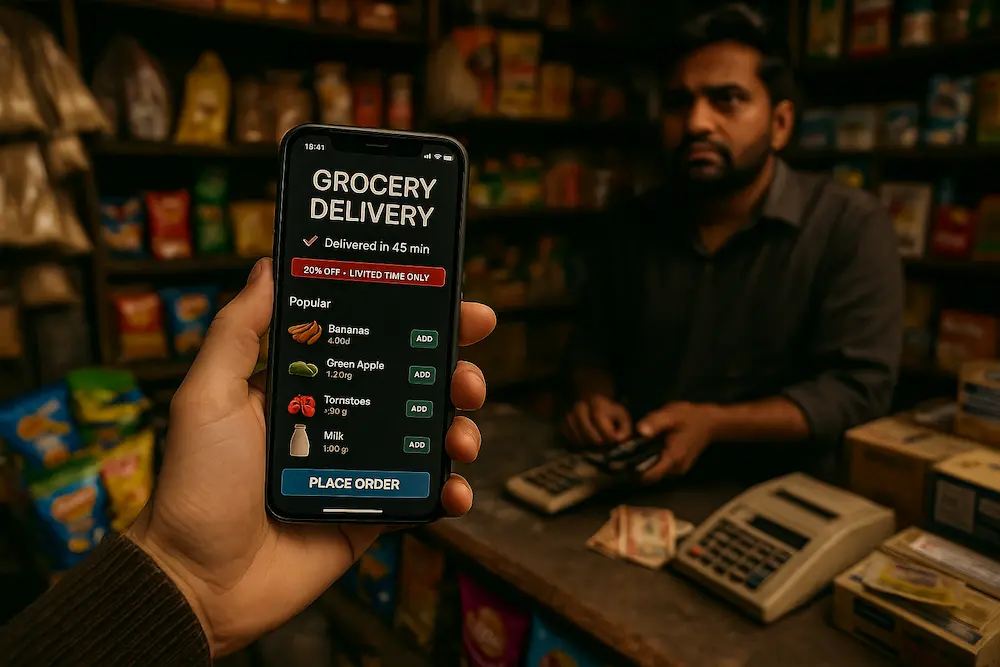
In early 2020, they built a full-fledged app — KiranaKart. The concept was simple: customers could order groceries and get them within 45 minutes. It sounded promising. They partnered with local kirana stores and offered heavy discounts to attract users. Investors, impressed by their Stanford background and working app, poured in nearly ₹5 crores.
But here’s where things started falling apart. KiranaKart’s discounts were so deep that every order lost money. Product prices were often lower than their combined cost of procurement, packaging, and delivery. The company was bleeding cash from day one.
And as lockdowns eased, people began stepping out again — the demand dropped. Orders were late, quality control slipped, and customers complained about missing items. Within eight months, KiranaKart shut down, leaving behind frustrated investors and two heartbroken founders.
For many young entrepreneurs, that would’ve been the end. But for Aadit and Kaivalya, it was just the beginning. They didn’t see KiranaKart’s failure as defeat — they saw it as a lesson.
They sat down, analyzed every flaw, and asked tough questions: Why didn’t deliveries meet deadlines? Why were costs so high? Why did communication with store owners break down? Every answer revealed a clue. They realized the biggest problem wasn’t in demand — it was in control. Relying on local shops meant depending on inconsistent supply chains. The only way to fix it was to build their own.
And that’s when the idea of Zepto was born.
Part Two: The Rise of Zepto
The name Zepto comes from the scientific term “zepto,” meaning 10⁻²¹ — something extremely small. The founders chose it to symbolize their vision: delivery so fast it felt almost instant. This wasn’t just about groceries anymore; it was about speed as a service.
Armed with the lessons of KiranaKart, Aadit and Kaivalya designed a new system from the ground up. Instead of partnering with kirana stores, they built dark stores — small, centralized warehouses within every 1–3 km radius. These stores stocked only high-demand essentials: milk, bread, snacks, vegetables, and daily groceries. The inventory was fully digitized and updated in real time.
Now, when a customer placed an order, it didn’t go to a local shop — it went straight to the nearest dark store. A picker had 59 seconds to grab all items, while a delivery rider got the location instantly and dashed out. In some areas, deliveries arrived in just 6–8 minutes.
When they launched Zepto in Mumbai in 2021, people didn’t believe it. “Groceries in 10 minutes? Impossible!” But then it worked — and social media exploded. Users posted screenshots of deliveries arriving in six minutes, calling Zepto “magic on wheels.”
Investors took notice again. This time, Aadit and Kaivalya came prepared — they had a proven system, real data, and the confidence of experience. Backed by Nexus Venture Partners, Y Combinator, and Glade Brook Capital, Zepto raised over $900 million within two years. What KiranaKart couldn’t do in 8 months, Zepto achieved in 18 — a valuation of over $1 billion, officially making it a unicorn.
But success didn’t come without challenges. As Zepto grew, it faced criticism — claims of underpaid riders, stressful delivery deadlines, and even price manipulation. Some users alleged that Zepto showed different prices on iPhones and Android phones, while others pointed out hidden subscription conditions under Zepto Pass. Yet, despite the controversies, Zepto kept expanding — to cities like Delhi, Bengaluru, Hyderabad, and Pune.

This is an AI-generated image — not a real historical photo.
What made Zepto stand out wasn’t just its speed — it was its precision. Every delivery felt seamless, from packaging to timing. The company’s use of data and technology gave it an edge over competitors like Blinkit and Swiggy Instamart. While others promised “quick,” Zepto delivered instant.
More importantly, Zepto connected emotionally with a new generation. It became the answer to the “instant everything” lifestyle of young urban India. Whether it was a midnight snack craving, last-minute party supplies, or emergency groceries, Zepto became synonymous with reliability and ease.
Today, Zepto stands as one of India’s fastest-growing startups — built not on perfection, but on persistence. Aadit and Kaivalya, once just teenagers experimenting during a lockdown, now lead a company that employs thousands and serves millions. Their journey is proof that failure, when studied deeply, can be the strongest foundation for success.
What We Can Learn
The story of Zepto teaches us that failure isn’t the opposite of success — it’s the path to it. KiranaKart’s collapse gave birth to Zepto’s clarity. Aadit and Kaivalya didn’t just build a company; they built resilience, adaptability, and purpose.
In every 10-minute delivery, there’s a hidden story of long nights, failed experiments, and relentless improvement. Zepto’s success reminds us that the most powerful startups aren’t born perfect — they’re built by people who dare to learn, rebuild, and move faster every time they fall.
Images and trademarks of creators or brands featured in this article
are used for identification and informational purposes only.
All rights belong to their respective owners. No endorsement is implied.