This crazy biography dives deep into Elon Musk’s extraordinary life, from his troubled childhood in South Africa to his rise as one of the most influential innovators of our era. It explores his emotional struggles, personal behavior, daring strategies, earth-shaking failures, the creation of Tesla, SpaceX, Neuralink, and more. Told in a natural, human voice with reflections at emotional turning points, it captures both the brilliance and the vulnerability behind his decisions. This is not a list of events — it is a living story that feels honest, raw, and deeply human.
Elon Musk’s life begins far away from the spotlight, in the quiet suburbs of Pretoria, South Africa, where the dry heat and endless skies might have been the first things that made him look upward. As a child, he wasn’t the loud one, not the kid running around with scraped knees and wild laughter. He was the quiet one — the one who sat alone with books stacked higher than his age, the boy who drifted into imagination as if reality wasn’t quite enough for him.
His mother worked constantly to keep the family stable. His father, an engineer with a sharp mind but a complicated personality, made home feel like a place of equations and tension instead of comfort. The divorce when Elon was young left a crack in his world, and that crack never quite sealed. He found sanctuary in reading because books didn’t scream, books didn’t argue, books didn’t judge. They only opened worlds.
And honestly, whenever I imagine him there — a skinny kid with glasses too big for his face, quietly scanning pages while chaos swirled around him — I can’t help but think that those moments sculpted him. Not gently, but forcefully. If life won’t give you peace, your mind builds one.
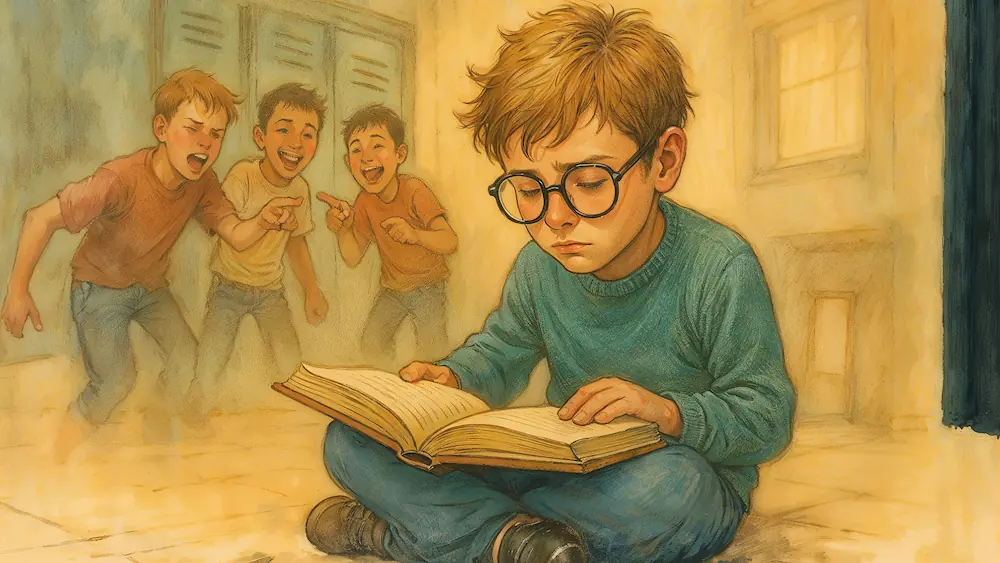
School wasn’t kinder. Elon was small, awkward, and easy to target. He was bullied so harshly that once he was beaten until unconscious and hospitalized. While other kids were learning how to blend in socially, Musk was learning something else entirely — that the world could break you if you didn’t build armor. Instead of toughening outwardly, he escaped inward, diving deeper into computers, science, stories, and numbers.
By age 10, he found his first true companion: a computer. Not as entertainment, but as a partner in thought. He taught himself programming from a simple manual — line by line, logic by logic — until the machine felt like an extension of his brain. At twelve, he wrote a video game and sold it. While it wasn’t a masterpiece, it showed something crucial: even as a kid, he preferred creating worlds over just living in one.
There’s something about that which I deeply respect — this idea that imagination is not escape, but foundation.
As he grew older, he began seeing South Africa not as home, but as limitation. The political climate, the social norms, the expectations — all of it felt too small for the scale of dreams he carried inside. He didn’t want to participate in apartheid-era military service, and he didn’t want to waste time waiting for a world he didn’t believe in. So, at seventeen, he left.
Imagine that for a second — leaving your country before you’re even fully an adult, stepping into continents where nobody knows your name, chasing opportunities you haven’t even fully shaped yet. To me, that shows a level of courage fueled by both pain and ambition. When staying hurts more than leaving, destiny calls louder.
Canada was his first stop, then the United States. He studied economics and physics — a strange combination for most people, but perfectly aligned for someone who saw the world not as it is, but as a system that could be redesigned. Physics gave him the rules of the universe; economics taught him how to influence it.
After college, instead of searching for a job, he did what would eventually become his signature move: he jumped straight into building something. Along with his brother, he started Zip2 — a simple idea at the time, a mapping and business directory for newspapers. The work was brutal: cramped offices, sleeping bags under desks, selling door-to-door, convincing newspapers that the internet was not a joke. When Zip2 sold for hundreds of millions, Musk earned his first real fortune.
Most people would relax at that point. Buy a house, travel, breathe. Musk didn’t. He put almost everything into another company — an online banking startup called X.com. Again he faced conflicts, resistance, pushback. Eventually X.com evolved into PayPal, and though he was pushed out as CEO, he remained a significant shareholder. PayPal’s sale made him enormously wealthy.
Now, here’s a moment where my own thoughts kick in. If you look at his life, you notice a pattern: every time Elon gets money, he doesn’t safeguard it—he risks it. Completely. It’s either courageous or insane, depending on how you look at it. I personally think it's a mix of both. Only someone who refuses comfort can chase a future this big.
With the PayPal exit, he had enough wealth to live quietly for the rest of his life. But that wasn’t his path. Instead, he walked straight into the most difficult, most expensive, most failure-prone industries: space exploration, automotive manufacturing, and renewable energy.
SpaceX came first — a company born from his obsession with making humanity multi-planetary. He wasn’t joking when he said he wanted to go to Mars one day. Most people rolled their eyes. But Musk wasn’t dreaming — he was planning.
He invested nearly all his money into SpaceX. The early rockets — Falcon 1 — failed. Not once. Not twice. Three times. Each failure cost millions, and with each explosion, people laughed harder.
But failure, to Elon, never seemed like shame. It was a tool. A test. A correction.
After the third failure, SpaceX was down to its last pennies. That fourth launch would decide the fate of everything — not just the company, but his entire life savings. And sometimes I wonder how he felt during that moment. Standing on the edge of collapse, watching engines ignite with silent prayers trapped in his chest. And then — the rocket succeeded. It reached orbit. Years of ridicule transformed into instant credibility.
That moment changed everything.
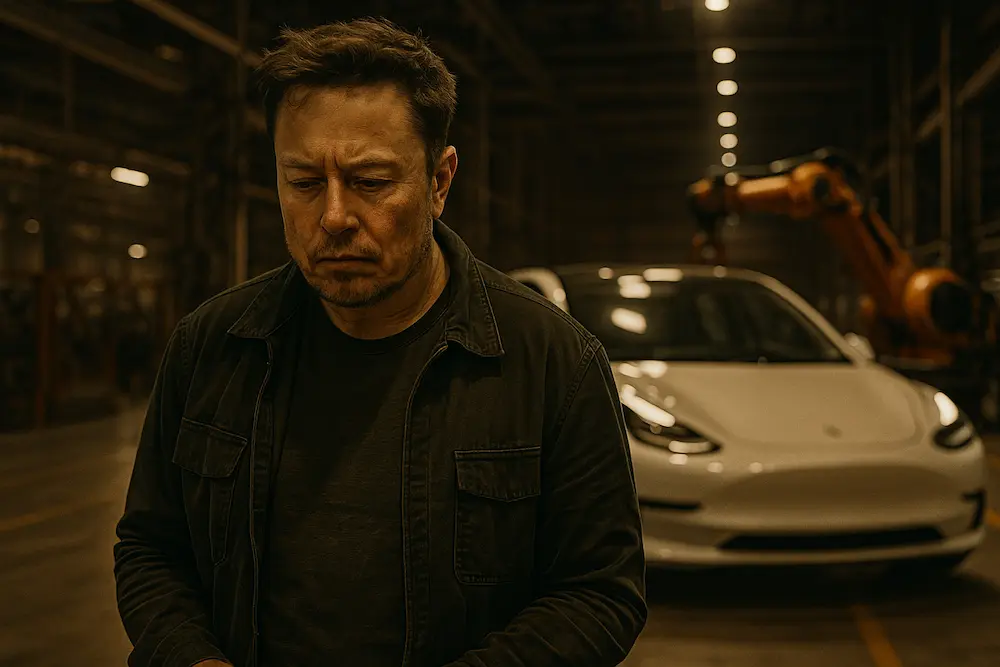
This is an AI-generated image — not a real historical photo.
At the same time, Tesla was just as chaotic. Building electric cars at scale seemed impossible. Factories stalled. Batteries failed. Investors panicked. Elon poured money from his own pocket to keep the company alive. He worked insane hours — sleeping on factory floors, skipping meals, pushing engineers with intensity that felt both heroic and overwhelming.
I have to be honest here: sometimes I question if his drive crosses the line into self-destruction. But then again, without that intensity, Tesla would have been a forgotten startup instead of a global force.
His companies expanded: SolarCity in renewable energy, The Boring Company digging tunnels, Starlink launching satellites, and later Neuralink attempting to fuse the human brain with computers. Each new venture wasn’t random — they all connected back to a single vision: improving humanity’s future through technology.
But success didn’t erase his flaws. Elon’s behavior often swings between genius and unpredictability. He can be blunt, emotional, even impulsive. He says things publicly that create storms overnight. His leadership style pushes people to the edge. He asks for impossible deadlines because, in his mind, impossible is negotiable.
And here’s my personal take: I don’t always agree with his approach. Sometimes his decisions feel too drastic, too harsh. But at the same time, it’s hard to deny that he operates at a pressure level few humans can comprehend. Visionaries rarely walk the smooth path.
Failures continued. Rockets still exploded. Cars still faced production delays. Media criticized his comments. Some investors called him reckless. But despite every critique, he kept building. That’s the thing about Musk — whether you like him or not, he doesn’t break; he bends, learns, and comes back with even more force.
One of the most interesting contradictions in his personality is his relationship with artificial intelligence. Despite building AI-dependent products and companies, he repeatedly warns that AI could be humanity’s biggest threat. He argues for regulation, responsibility, and caution. He believes AI could surpass human control if not monitored carefully. It’s strange — a man pushing technology forward while urging the world to slow down.
Personally, I find this duality fascinating. It’s like he sees clearer than most, and the clarity scares even him. A builder who is afraid of what he builds — that’s a very human conflict.
His personal life is similarly complex. Relationships came and went. He has multiple children, and his family life, filled with both joy and pain, often reflects the chaos of his professional world. Being Elon Musk means balancing the weight of entire industries with the fragile needs of real human relationships. And judging from the outside, I think even he struggles with that balance.
Today, Elon Musk stands as a global titan — not because he is flawless, but because he refuses to quit. His companies have changed transportation, energy, internet access, space travel, and even how nations plan their futures. Tesla made electric cars mainstream. SpaceX lowered rocket costs dramatically. Starlink expanded global internet access. And Neuralink began exploring the next frontier of human-machine connection.
And yet, beneath all the headlines, the achievements, the billions, I still see the same boy from Pretoria. Quiet. Curious. Driven by something deeper than ambition — driven by the need to build a world better than the one he came from. A world where humanity isn’t confined to one planet. A world where energy doesn’t destroy nature. A world where technology is used thoughtfully, not recklessly.
I don’t think Musk’s story is about success. I think it’s about defiance. It’s about refusing to accept the world as it is. It’s about turning trauma into vision, loneliness into imagination, failure into momentum.
He has made mistakes, no doubt. He has made decisions I disagree with. But I can’t ignore what he represents: the idea that even the most impossible ideas can be dragged into reality if someone is stubborn enough to fight for them.
And maybe that’s the greatest lesson hidden inside his chaotic, brilliant journey — that the future doesn’t arrive gently. The future is forced into existence by people who don’t care how many times they fall, as long as they fall forward.
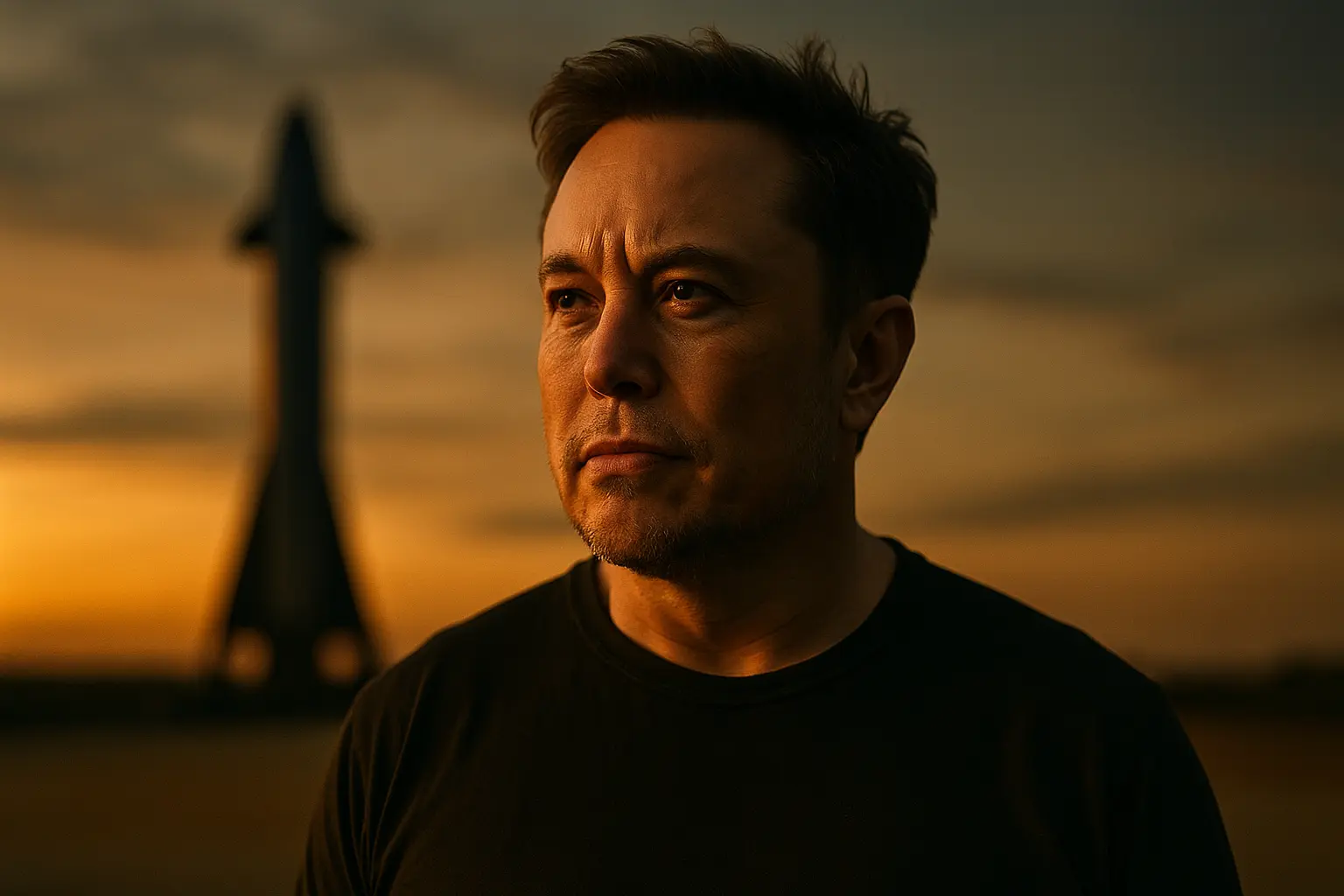
This is an AI-generated image — not a real historical photo.
Elon Musk isn’t a hero or a villain. He’s a force — flawed, relentless, unpredictable, transformative. And like all forces in history, his impact will be judged not by the noise he makes, but by the world he leaves behind.
Maybe one day humanity will stand on Mars, look up at the red horizon, and whisper gratitude to a boy who once read books alone in a corner, dreaming of stars big enough to hide the pain he carried. Or maybe future generations will see him as someone who tried too much. Either way, he changed the conversation — and that itself is history.